Dwimmer-crafty.
adj. skilled in the arts of illusion or threshold-magic; the art of seeing hidden things; jugglery; possessing the disciplined, generative power to create optical illusion

Of the seer Pelux, whose craft was the reading of hidden things, Layamon writes:
“Pelux hit wiste anan þurh his dweomer-craeften.”
Modern translation: “And Pelux knew it at once through his dwimmer-craft.”
From Layamon's Brut (c. 1190 – c. 1215), also known as The Chronicle of Britain, compiled and recast by the English priest Layamon.
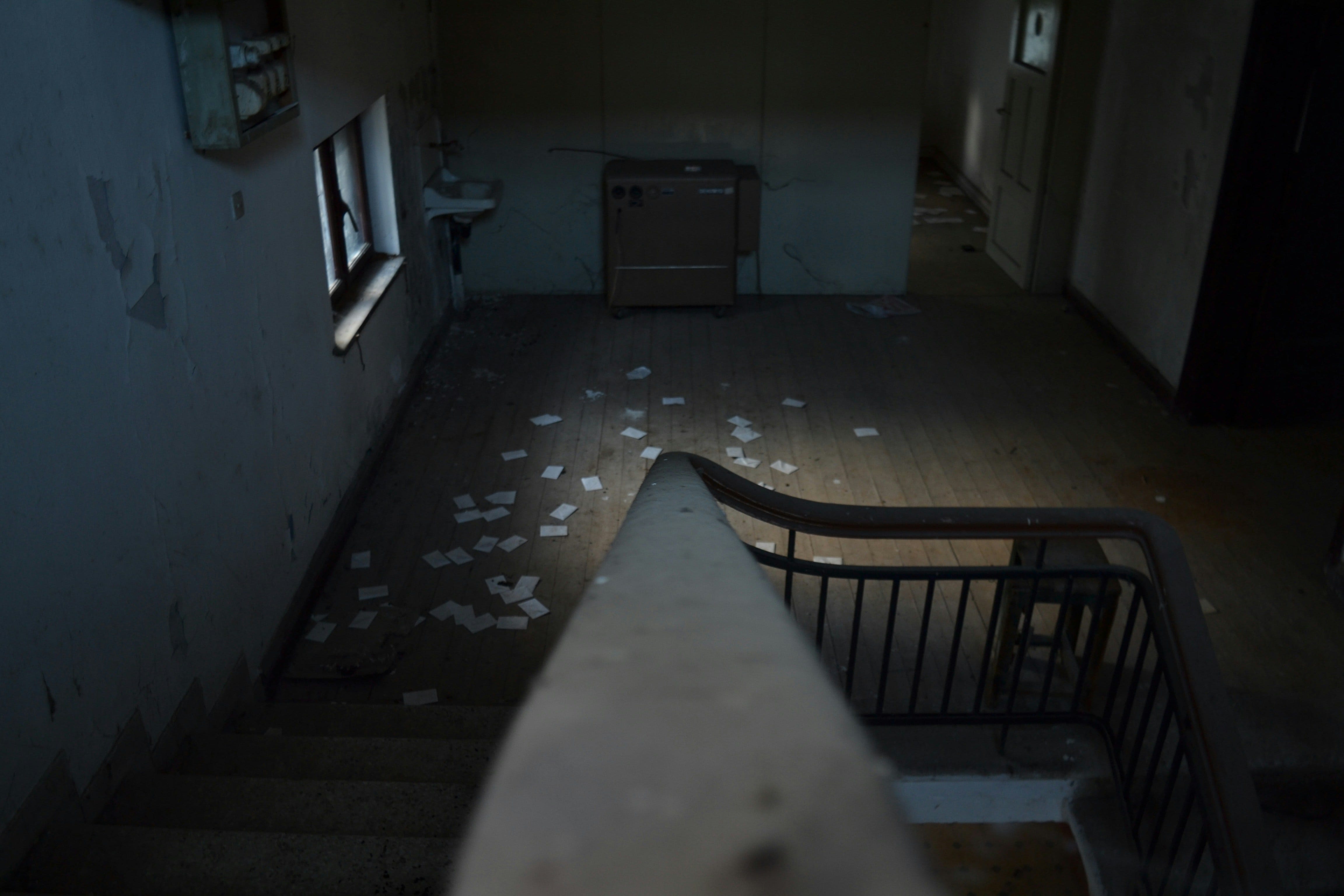
There is a particular quality of light inside a building that modern economy has finished with. It falls through cracked glass at angles no architect ever intended, landing on surfaces that have been slowly becoming something else for decades. Trucks sit quiet in the yard where they were left, the specific moment long ago when commerce ended and silence took over.
Paper is still on desks, drawers stand open, a machine has stopped mid-sentence.
A child understands this place immediately. Silhouettes move at the edge of vision, and a shadow assumes the sudden form of something alive. Thrill runs through the body before the mind can decide if fear is the right response. A child reads what is actually here, the strange electricity of ancient things.
We are taught very early to stop paying attention.
The grown world requires a mechanical vision that is mostly linear, rational, data-facing. It’s the price of admission to adulthood, a necessary armor. We learn to see economy, decay, structural failure, required improvements. We learn to look at what a thing is and stop before reflecting on what it might be.
The Middle English called this surrendered capacity dwimmer-crafty.
The root word, the Anglo-Saxon “dwimor,” refers to the phantom, the threshold figure. This is the dead tree at twilight taking on the sudden, terrifying shoulders of a man. To be dwimmer-crafty was to be a reader at the seam where the fixed world becomes briefly, dangerously permeable.
Illusion isn’t always a lie designed to cheat us. Sometimes it’s the mind’s creative rebellion against the tyranny of the actual. A refusal to let the ledger have the final word on what a place contains.
A forest that has swallowed an old stone wall knows something the blueprint doesn’t. Abandoned mills full of pigeon light and collapsed machinery aren’t empty, they’re just full of a different order of information, available only to an eye that hasn’t forgotten entirely how to be thrilled by what cannot be immediately explained.
To live dwimmer-crafty is to keep this eye open. It is to stand at the threshold between what a thing is and what it might be, refusing to look away.
We carry an understandable and mostly helpful bias towards reason. Thus the world will always offer its gray consensus that magic has left the field, the future is already calculated, and the only honest vision is the one confirming disillusionment.
The dwimmer-crafty heart declines. It finds the seam and steps through.
Dwimmer-crafty.
(adj., skilled in magical arts or cunning illusion, jugglery).
Behind a barn’s sagging doors,
boys coax stars
from cracked glass.
Fireflies blink signals
from forgotten gods.
Shadows rehearse tricks
against the hayloft wall:
a dragon made of two fingers,
a shrine conjured from dust.
Outside, the grown world
pretends not to watch
as hinges faintly glow,
wood remembering spells
long sworn forgotten.
Dwimmer-crafty. (adj. From Old English gedwimor (apparition, phantasm) and cræft (skill, art, or mastery).
The compound with crafty—from Old English cræft (skill, art, or power)—produced a single word for the mastery of thresholds. Largely lost from common use by the sixteenth century, surviving mainly in folklore and the margins of medieval manuscripts.
In Old English, “cræft” carried none of its modern connotation of cunning or deception. A cræftiga was a skilled artisan. The compound means, at its root, the mastery of apparitions. The Middle English “dweomercraeft” extended this into the broader practice of magical art.
J.R.R. Tolkien, himself steeped in these roots, gave the word its most famous modern appearance as an epithet for Saruman, the wizard whose gifts of deep seeing had been turned toward manipulation and ruin. The original had an expanded meaning that included more than just dark illusion or dark magic.