Lyftflōga
the air flyer or sky winger; poetic term for dragon

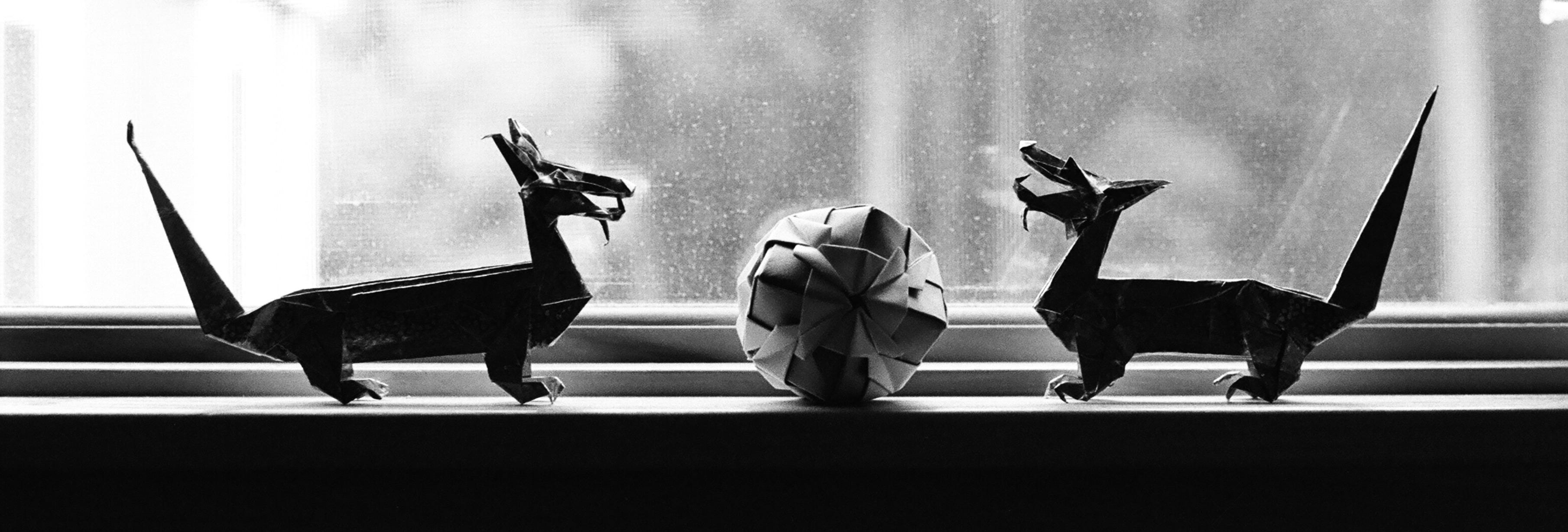
“There is no transcendence in Beowulf, and no redemption […] kill the dragon — but the dragon will get you anyway.” James Parker, Beowulf is Back (The Atlantic)
We’ve buried the sky under a mountain of Greek and Latin. Aviation, aerodynamics, and surveillance. Words that sound like blueprints, sterile and safely distant. But the Anglo-Saxon had no interest in blueprints; they were moved by the wonderful and strange shock of the thing itself.
When they looked into the sky there was no reaching for high-flown mythology. They used words stuck in the throat like warnings. One beautiful example is lyftflōga. The air-flyer or sky-winger.
There is a startling, almost primitive directness in this naming. It is the language of a witness stripped of all metaphor by the proximity of threat. If you were to actually see a dragon, you probably wouldn’t reach for "serpent" or "beast." You would utter the two most undeniable facts of the moment: it is in the air, and it’s moving.
This is the mysterious and beautiful naming-sense of a child. Pure, observational, and devoid of all hierarchy. To a child, the world is a series of marvelous and terrible collisions; to the Anglo-Saxon, the lyftflōga was the ultimate collision . . . the solidity of a thing that exists surrendered to the ghostliness of the wind.
The people of Middle English pursued safety in the density of the ground. Heavy timber, rooted stone, the most tangible and predictable "layers" of the law. To fly was to be a ghost or a god; a creature of flight would have been the ultimate nonsensical intruder, the being that ignores your fences, your roofs, and all of your borders.
We are living in the air-flyer’s shadow. The lyftflōga is eyeing everyone, requiring nobody’s belief.
It is there, aloft. It’s coming.
Lyftflōga.
(n. air-flyer or sky-winger)
Flocks turn
without a sound.
Cattle drift, weirdly,
to low corners.
Water moves
in a bowl
no hand has touched.
You feel it.
Something solid
given to the wind.
A floating brute
breaks the light.
All paper, fangs
and glue.
Children complain
of vibes.
Chasing
through chambers
of sleep,
into daylight.
Shadow arriving
before anything
visible.
The mind
holds its need for
an orderly world.
Yet the shadow
has no edge.
Lyftflōga. ((noun. pronounced LUFT-flo-ga) Old English. 750 AD. A compound noun used in the epic poem Beowulf to describe the dragon. It is formed from lyft (air, sky, atmosphere) and floga (flier/fugitive), literally translating to “sky-flyer” or “air-flier.”)
The term appears in the final third of the poem of Beowulf, used to characterize the dragon as it terrorizes the Geats tribe by night. Using “lyftflōga” emphasizes the dragon’s mastery of the air, contrasting it with Beowulf as the earthbound hero. It is one of several evocative kennings (metaphorical compounds) used for the beast.
In the entire surviving corpus of Old English literature, the word lyftflōga appears only once. This makes it a hapax legomenon—a term that is recorded only a single time in a given language or body of literature.
Its lone appearance is in the final part of Beowulf (line 2315) to describe the dragon as it begins its night-time assault on the Geats. Many scholars consider the Beowulf poet to be particularly inventive with language, frequently “conjoining two opposing concepts” to create unique, evocative compounds, such as “bone house,” “whale road” and “twilight spoiler.”
That is amazing that this word has only been used once in writing/literature. Your poem about it is wonderful. It almost gave me chills.
Interesting that it is an old English word, as it looks like Swedish to me!