Mōdraniht.
Anglo Saxon for Mothers' Night; a night dedicated to ancestral mothers; event held on or around the northern hemisphere's longest night of the year (winter solstice) by Anglo-Saxon pagans.

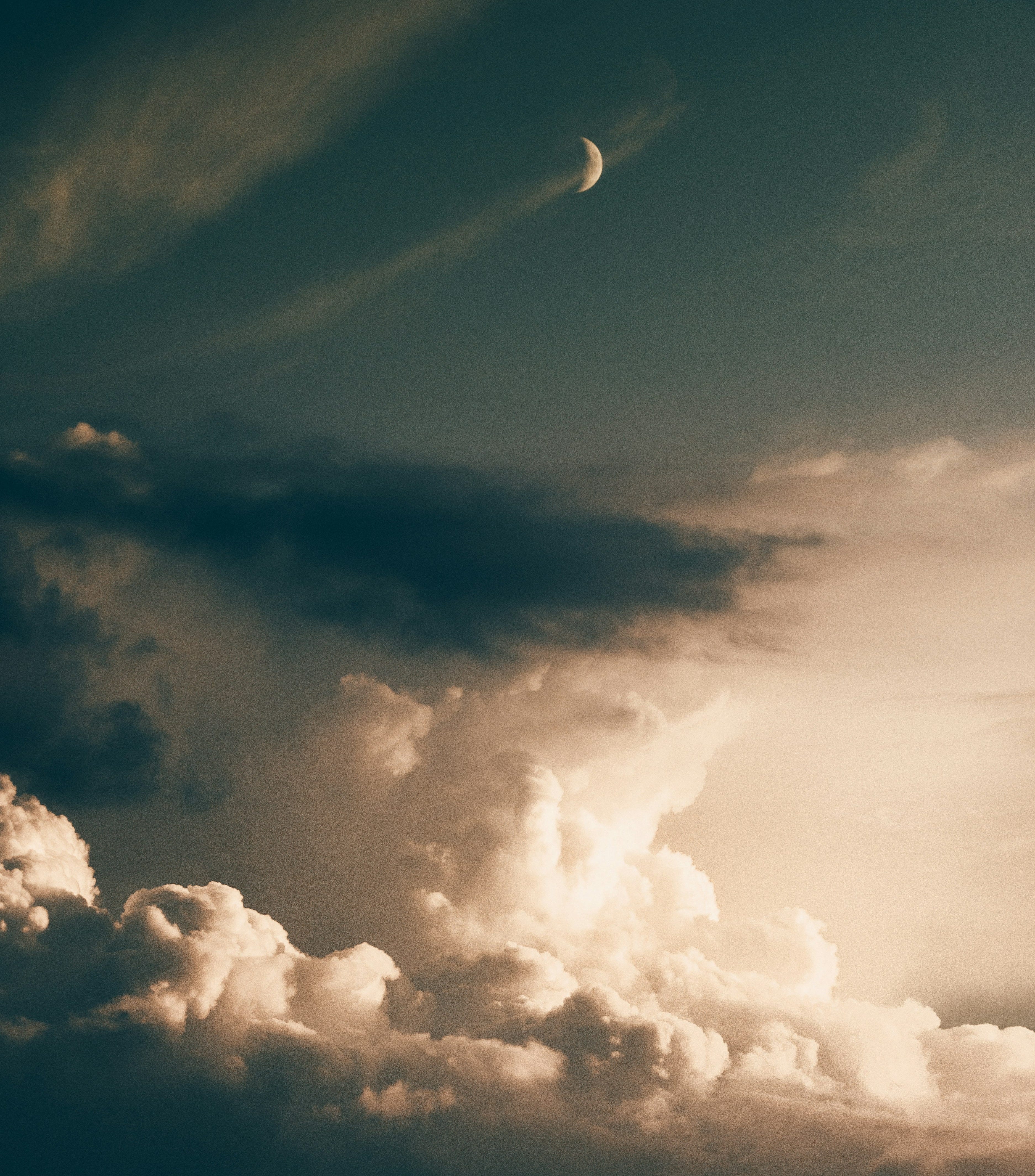
“That very night, which we hold so sacred, they used to call by the heathen word Modranecht, that is, ‘mothers’ night,’ because (we suspect) of the ceremonies they enacted all that night.” Bede (circa 735, translated from Latin)
Winter solstice is the year’s longest night, darkness at its furthest reach before return of light. Every culture marks winter in some way. The Anglo-Saxons kept vigil there, they called it mothers’ night.
Stone altars survive from the first four centuries, each carved with the same three seated figures. In their laps and hands grain, swaddled infants, they seem to watch something just beyond the frame. Faces worn nearly smooth by weather and centuries of touch.
Scholars call them the Matres or the Mothers. Likely built by soldiers traveling, farmers facing winter, ordinary people who had stood close enough to something to understand it required stone.
Three figures, scholars suspect, because it was understood that no mother stands alone. Behind her is her mother, and behind her another. A lineage extending beyond names and memory, each life bent away from itself toward the fragile continuance of another life. A long expenditure of the self.
Today there is much speculation as to what this lost holiday actually celebrated. The women who kept Mōdraniht did not explain it that we know of. There was nothing to explain. They stayed awake together through the longest dark.
I suspect what they recognized there was a force that had existed before kingdoms, churches, and the names of gods. The force that keeps watch beside fever beds, rises in the night to quiet hunger, and pours the substance of one life steadily into another until the boundary between is difficult to see.
Wisdom lives in this, though it rarely announces itself. It moves downward into the body, into hands, spine, blood, habit. A knowledge of how to keep something precious and fragile alive through darkness.
Bede called the ceremony heathen. But every sentence he wrote, including the one that preserved this word, was made possible by someone who had once kept such a vigil over him. He stood within it, and despite his mapping of tides and seasons and calculations of the movements of the heavens, he did not know it.
We are all, in one way or another, the beneficiaries of an ancient labor that disappears almost completely into the lives it sustains. A form of love so continuous it is difficult to see at all, like darkness carrying every living thing for half the earth at a time.
Mōdraniht.
(An event held on or around the northern hemisphere’s longest night of the year (winter solstice) by Anglo-Saxon pagans)
Mothers’ night
widens past the place
where names run out,
into a murk
that holds every soul.
To give with no
thought of giving.
To hold night
so others might
sleep within it.
To love a thing so far
into becoming
that the thread
of self frays.
The wisdom
that lives only
in joints.
Body knows
before mind
can name.
Beyond gratitude,
as deep water
exceeds all questions
of thirst.
This is the oldest work.
Mōdraniht.
The longest night
asks nothing
it has not already given.
Mōdraniht. (noun; Old English; mothers’ night or the night of the mothers)
From Old English mōdor and niht (mother, and night). Plural possessive. The word survives in a single Latin sentence, written in 725 by a Northumbrian monk named Bede, who noted that the Anglo-Saxon pagans had marked the winter solstice, the longest night of the year, with a ceremony they called by this name.