Versipellis
one who is skilled in dissimulation; changing shape; someone who is devious and sly

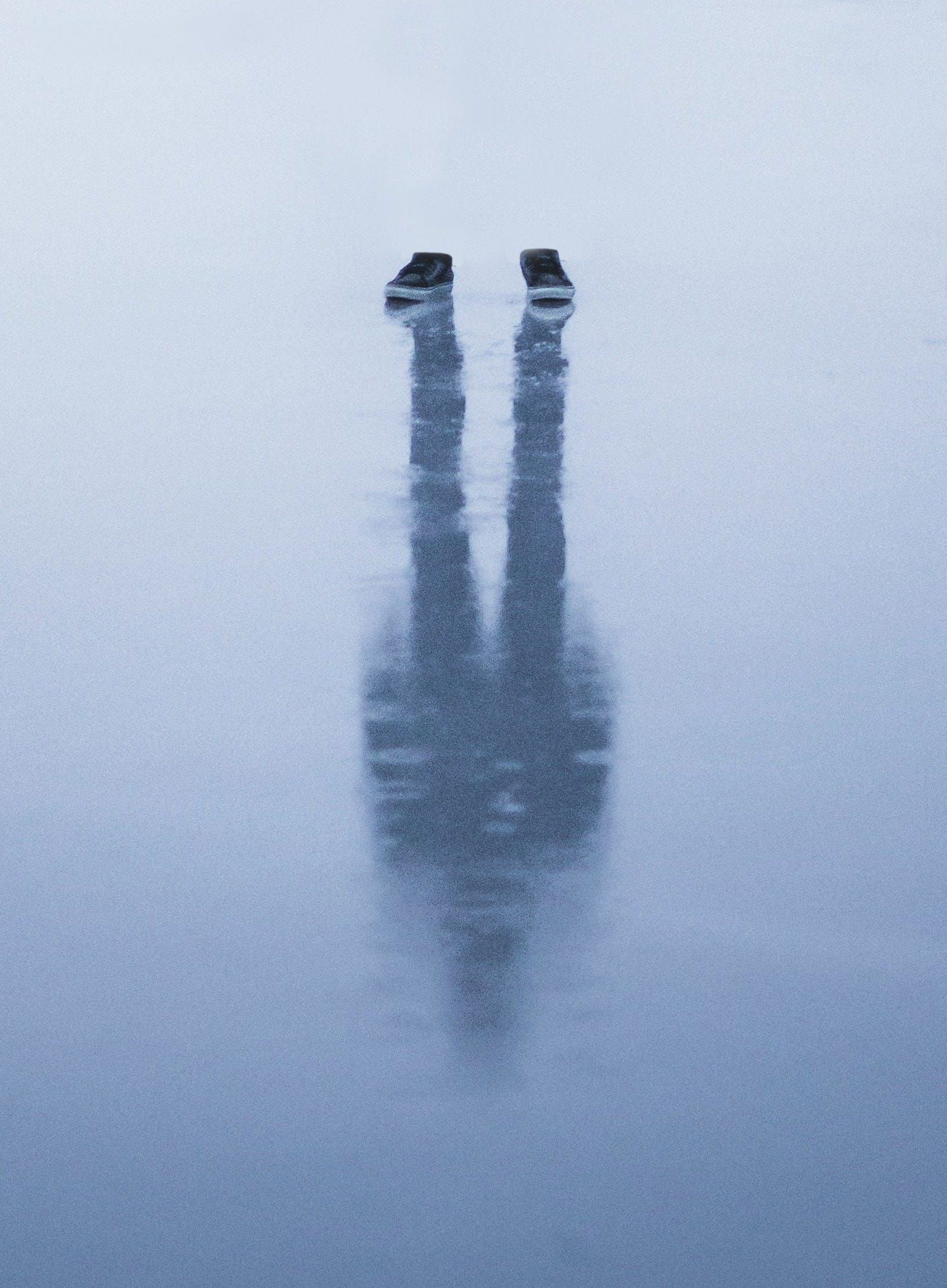
In the history of rhetoric, the versipellis is an architect of the shifting line. It identifies the figure who treats morality as a wardrobe. In the public forum, such a man might be draped in the white wool of a “protector of laws” while his internal pulse beats only for the hunt.
To witness this skin-turning in modern life is to watch the slow fracture of a house we were told was a fortress. Such a person, once fluent in appetite, learns the cadence of piety with astonishing ease. The same mouth that made a spectacle of instinct now borrows the grammar of resurrection. Language can’t change the animal; it can only warm it.
This is the double entendre perfected: virtue spoken as costume, conviction worn as insulation. Righteousness is just a garment cut to conceal weathered histories, pulled tight against the cold of consequence. What is called moral clarity begins to function as its opposite, a covering not a condition.
The tragedy isn’t that the lines keep moving, but that the ground under them dissolves. A new doctrine emerges in which action is absolved by movement. Authority becomes its own alibi. The skin, turned often enough, no longer remembers which side was meant to face the light.
This is the versipellis at its most dangerous . . . when deception is no longer required, when deception instead becomes a central feature of the figure. When the distinction between man and wolf is dismissed as naive, predation is recast as leadership.
The glass can’t be unshattered.
What we called institutions were never iron, but agreements held in place only by a shared sense of what is unacceptable. Once that is shed, like a winter coat no longer needed, the original form is carried off by the wind.
My understanding is that the Romans feared stability, not change, as the core feature of the versipellis. The verspellis is and always has been the beast, even when it wears its human mask and speaks of peace. The wolf is not a transformation; it’s a permanent internal condition, hidden by a thin, reversible layer of affability.
We stand now in the “long after” of that realization: that the boundaries have been discarded, not moved. We sit in the quiet recognition that a man may step fully into the light while wearing a darkness that cannot yield.
Once the outer structures have worn thin, and the skin has turned so many times the worn human underneath fades, what remains is actually a far more difficult question.
What will it take for humanity to answer the call of what is standing in plain sight?
Versipellis
n. one who is skilled in dissimulation
Glass always holds
what has touched it.
Light always bends:
not broken,
just arriving
elsewhere.
Across the open,
something hunts
without cover.
There is no change in season.
No signal given.
*Only this:*
the air
keeping its shape.
We go on
calling it weather.
But in this weather,
not seeing
might be unholy.
Versipellis. (noun., derived from Latin “vertere” (to turn) and “pellis” (skin or hide).
The word captures an unsettling idea, that a figure or a being never becomes other, but rather turns it outer layer bringing what has been concealed into view. What appears is not a new condition, but the same one seen without its customary disguise. The basis for any claim of surprise is removed entirely.
The whole weather image is crawling around in my head… and I do not like it there, which probably means you did your job.
Just read your versipellis entry today after reading about the perpetrator of the Gilgo beach killings who confessed guilty in court today. His wife of many years could not believe he was capable of this set of murders.
Was he a versipellis?
A suggestion I would make is to consider including the use of your word entries in a sentence as an example. One using versipellis would be of interest to confirm I understood the word correctly.