Wanhope
condition of lacking hope; despair or hopelessness of salvation as a theological sin; lack of confidence in oneself. (note: later usage (1550s) inverted the meaning to faint or vain hope)

Now comth wanhope þat is dispeire of the mercy of god þat comth somtyme of to moch outrageous sorow and som tyme of to moch drede
Geoffrey Chaucer The Parson’s Tale (c.1400)
In Old English, “wanhope” referred to the feeling of something slowly paling, like color leaving winter fields. A lantern burning low in fog. The long exhaustion that comes from holding oneself tight against forces too large to manage.
On a quiet morning walk, if you step away from the pavement and observe the woods you are witnessing an ongoing, multi-billion year process of continuance. Ferns uncurl without instruction. The oak draws deep water through drought without a strategic plan. Even after storm or fire the woods don’t panic. The living world simply resumes.
Intellectually we know that we belong to this same order. We are not standing outside nature. We are made of the same dust, governed by the same underlying processes that move weather, close wounds, and return growth to burned hillsides.
Yet this knowing collapses the moment we turn to our own lives, and in particular our tasks, wants, and future ambitions.
We reach inside the machinery, insisting on cranking the gears by hand, certain that if we drop our gaze for even a second the entire mechanism will collapse. At a foundational level we make consequential choices and plans based on this mistrust.
These anxieties are clever. They masquerade as virtues, calling themselves excellence, foresight, vigilance, practical wisdom. We convince ourselves that our frantic management is preventing disaster or securing success, forgetting that a larger reality has been functioning for billions of years before our particular fears arrived.
There is a point at which vigilance becomes a superstition. But a person can also tighten against life for so long that the tightening itself becomes exhausting. Sleep becomes shallow, thoughts repetitive. Every silence feels like negligence. From this place of tiredness, something eventually gives way.
With age and tolerance of difficulty one can begin to soften. This shift isn’t usually dramatic or instantaneous. Rather it is like wet bark slowly peeling from birch. The mind loosens its grip a fraction and the world, strangely, does not collapse. It starts to wonder if perhaps the goals we set for ourselves are a movement away from fear rather than a movement towards a thing we truly crave.
The term wanhope was unambiguously dark, but I often wonder if losing hope in the particular things we had expected or wanted doesn’t present some other more important opportunity. Isn’t this loss of hope also a release? An unclenching? In addition to the simple fact of losing hope, the term insinuates that hope itself can become a kind of anxiety winding device. It begs to know if hope and anxiety are linked in ways that the mind often refuses to see?
Wanhope isn’t peace exactly. From a position of wanhope the world remains uncertain, and the potential for loss is still real. Storms arrive. But the exhausted mind begins to release the illusion that it alone keeps life from collapse.
The body works this way too. Skin knits itself in sleep, and blood remembers routes through darkness without permission or request. Life continues by means we only partly understand.
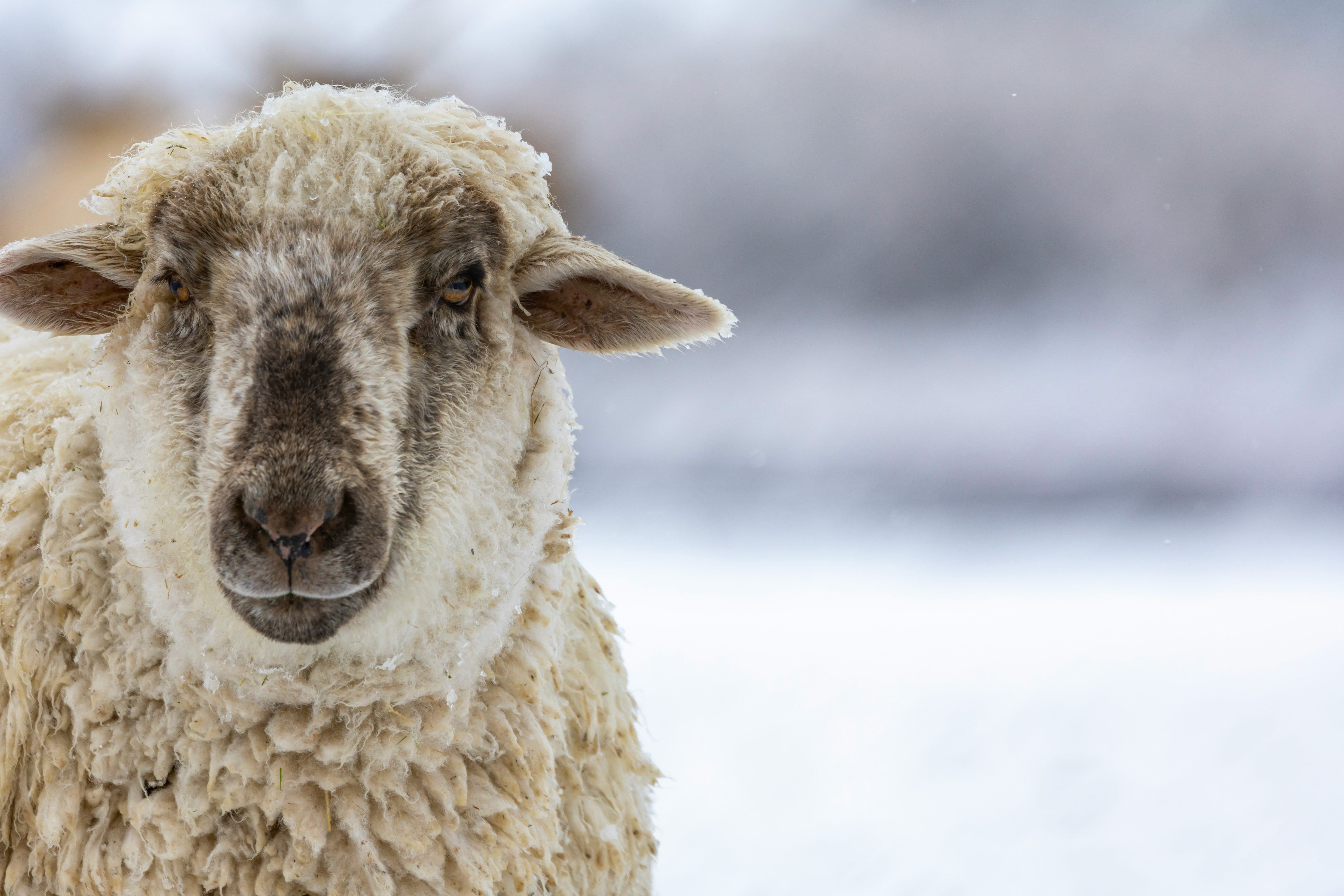
The sheep path disappears beneath snow, yet the sheep continue walking it anyway.
Wanhope
(depleted hope; waning optimism)
No climbing here.
No floor to hit.
The pit holds
a soot-heavy darkness.
Salt on stones.
Breath on the pane.
Wanhope works its slow theft—
gold thins from the grain.
The glass clouds, never breaking.
The hinges hold, but rusted.
The long pale wait.
Not knowing
if it is morning
or the end.
Wanhope. (n. late 13c.; see wan- + hope (n.). By c. 1300 also as "lack of confidence in oneself;" among the Elizabethans in a weakened sense of "faint hope" (1550s) as if from wan (adj.))
According to the Oxford English Dictionary, the earliest recorded evidence of the word dates back to 1297 in Robert of Gloucester’s Chronicle, which falls squarely within the Middle English period (1150–1500). However, its components have deep Germanic roots that go back much earlier. The prefix (wan-) is a native Old English element meaning “deficient” or “lacking”. It was highly active in Old English but remained common into the Middle English period when it was combined with “hope” to create wanhope. The noun (hope) didn’t emerge until the very late Old English period (hopa) before evolving into the standard Middle English word we recognize today.
The word started out as despair, or the failure to hope in God’s mercy. It was treated by the medieval church as a sin adjacent to acedia. But by the 1550s, wanhope flipped its meaning and was used to identify faint hope, or vain hope. Hence the word carries some unusual tension between these two contradictory historical meanings. The same term seems to contain both lack of hope and faint hope.
I am a bit confused by your discussion of wanhope. In some of your prose and in the poem you imply that there is something g positive about wanhope — almost as if it means holding life more lightly in a positive, Buddhist-like manner because one is too tired to keep holding it tightly. But the official definitions or explanations of the word don’t seem to reflect that positive dimension. Am I wrong?